Conservation
A community-led refuge protecting one of Ghana's most important remaining montane landscapes — and the species found nowhere else on Earth.
A protected refuge
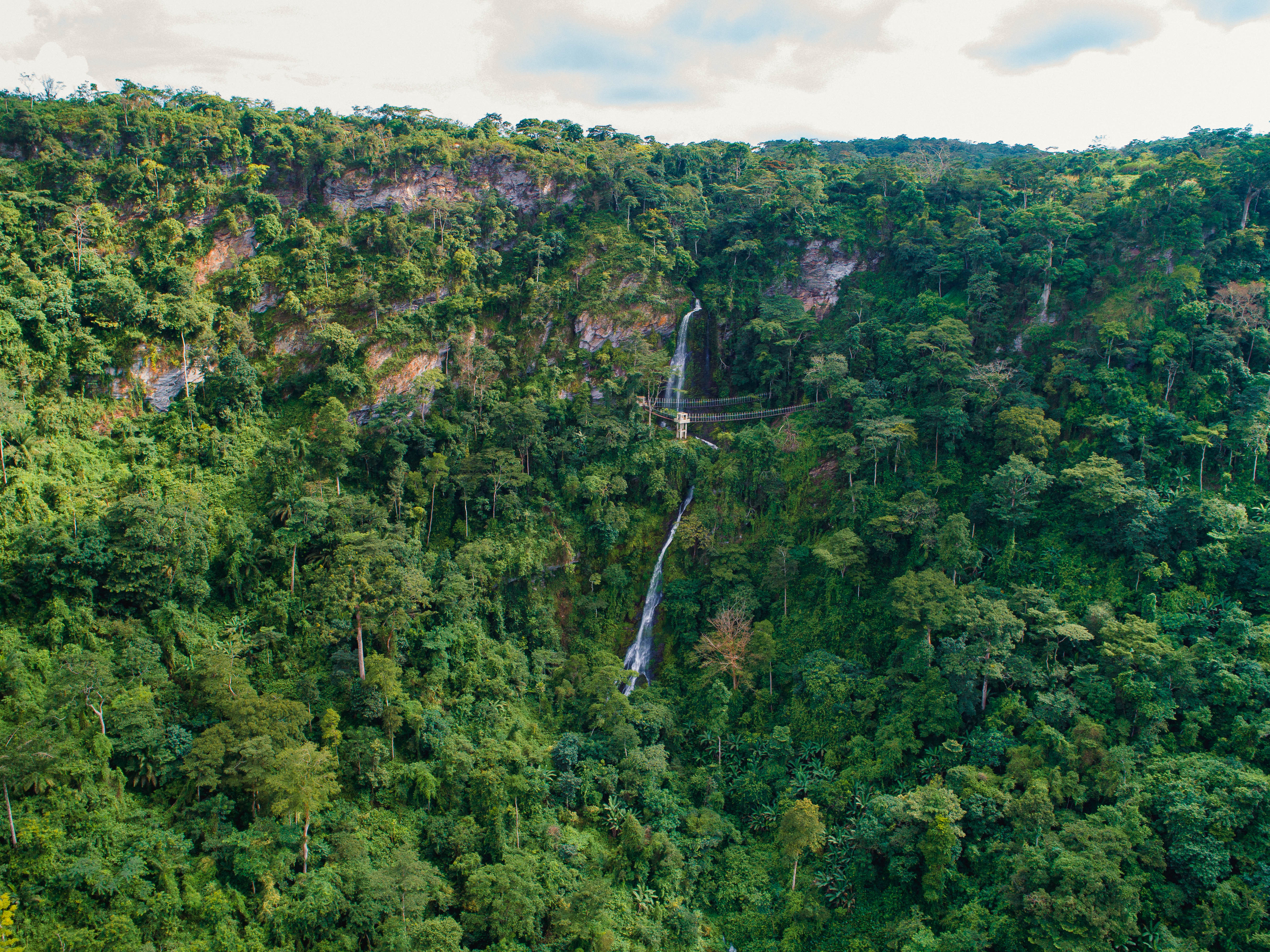
The Onepone Endangered Species Refuge (OESR) is a community-led conservation area in Ghana's Togo-Volta Highlands, established through collaboration between Herp Conservation Ghana, the Ghanaian government, and the landowning communities of Amedzofe and surrounding areas.
The refuge currently protects approximately 900 acres of montane forest and surrounding habitat, providing a safe haven for threatened amphibians, reptiles, plants, birds and other wildlife.
Unlike conventional conservation areas established through the acquisition of land, Onepone is built around land voluntarily committed to conservation by local landowners. The model gives communities a direct role in protecting the landscape while creating opportunities for conservation-linked livelihoods, particularly through ecotourism.
The refuge forms part of the Togo-Volta Highlands, a biologically important but highly fragmented landscape under pressure from farmland expansion, bushfires, logging, hunting and other forms of habitat loss.
Protecting more than a refuge
The vision for Onepone extends beyond the current protected boundary.
Herp Conservation Ghana and its partners are working towards a major expansion of the conservation landscape to approximately 22,000 acres, creating a much larger connected area of habitat across the highlands.
This expansion is important because many of the species found in and around Onepone do not survive in isolated patches of forest. Protecting a larger landscape can help maintain forest connectivity, streams, breeding sites and movement corridors, while giving communities a greater stake in the long-term protection of the area.
The wider conservation approach brings together habitat protection, species monitoring, community engagement, research, environmental education and sustainable ecotourism.
A refuge for threatened species
Onepone was established because of the exceptional number of threatened and range-restricted species found in this landscape.
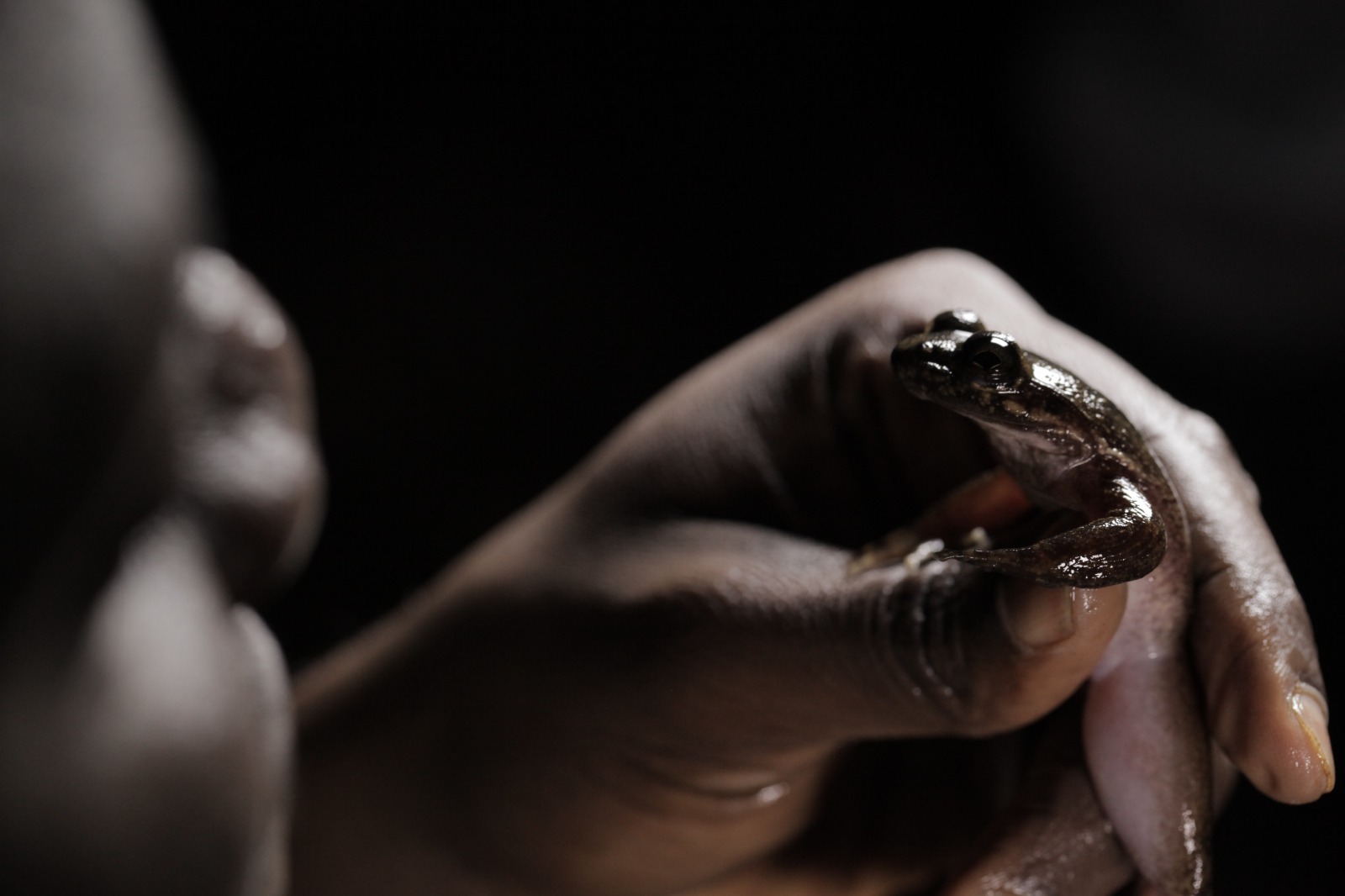
Among its most important species is the Togo Slippery Frog (Conraua derooi), a Critically Endangered species and one of Africa's most threatened amphibians. Onepone is recognised as one of the species' most important remaining strongholds.
But the refuge is home to far more than one species.
Recent surveys and conservation work have helped document 13 additional threatened species, highlighting the biological importance of a landscape that had previously received relatively limited protection.
The refuge and surrounding highlands support a remarkable diversity of:
- Threatened amphibians and reptiles
- Range-restricted plants
- Forest birds and raptors
- Mammals, including pangolins
- Butterflies and other invertebrates
- Montane and forest-dependent species found in few other places
Species of particular conservation importance include Togo Slippery Frog (Conraua derooi), as well as threatened plants and other wildlife recorded across the refuge and surrounding landscape.
Conservation through communities
At Onepone, conservation is not separated from the people who live around the forest.
The refuge works across seven local communities, bringing landowners, traditional authorities, government agencies, conservation organisations and local residents into the protection of the landscape.
This approach recognises that long-term conservation depends on local people seeing value in keeping forests standing.
Through community engagement, environmental education and ecotourism development, Onepone is working towards a model where protecting biodiversity also creates opportunities for local communities.
From protection to restoration
Protecting the remaining forest is only part of the challenge.
Herp Conservation Ghana's work also includes species monitoring, habitat assessment, research and conservation planning to understand what is changing across the landscape and where action is most urgently needed.
For species such as the Togo Slippery Frog, this means protecting the streams and forest habitats they depend on. For threatened plants and other wildlife, it means identifying remaining populations, understanding their threats and working with communities to reduce pressures such as uncontrolled fire, logging and habitat clearance.
Conservation and tourism working together
Onepone is also developing responsible ecotourism as a conservation tool.
The aim is to create meaningful visitor experiences while generating revenue that can contribute to the continued management and protection of the refuge and create benefits for surrounding communities.
From the forest and wildlife to the canopy walkway and adventure experiences being developed around the landscape, tourism provides an opportunity to connect people with the Togo-Volta Highlands — and to make conservation part of the local economy.
With every ticket you buy, you help support the protection of the refuge and the conservation of its threatened species.
Our long-term vision
The long-term goal is bigger than protecting a single forest.
It is to build a connected, community-supported conservation landscape across the Togo-Volta Highlands, where threatened species have secure habitat, local communities benefit from conservation, and future generations can continue to experience the forests and wildlife of this unique part of Ghana.
Onepone is a refuge for species — but it is also a commitment by people to keep this landscape alive.
The land, and the name
Onepone means togetherness. The name refers to the act that created the refuge: several clans and individual landowners in Amedzofe voluntarily handed over parcels of their own land to Herp Conservation Ghana, joining them into a single protected area and the canopy walkway that now crosses it. The refuge exists because that land was given, not acquired.
From hunting to guiding
Many of the guides who now lead visitors through Onepone once hunted the same forest for food — frogs included. That relationship with the land hasn't disappeared so much as changed shape: the tracking skills once used to catch are now used to find and show, as local knowledge of the forest becomes the basis for conservation-based tourism work instead.